A new year can bring fresh impetus and ideas. While raising a glass of champagne and waving goodbye to the year, the topic of conversation can often lead to New Year’s resolutions. If part of that conversation involves changing up your career, then you might be clinking celebratory glasses again after discovering the exciting – and sometimes lucrative – world of franchising.
A franchise is a brilliant way to get into business ownership without having to take the daunting plunge all on your own. Essentially, you buy a ‘business in a box’, with a tried-and-tested business model, guidelines already in place, a support team and other benefits.
Franchising is just a concept, though, and there are lots of different elements to factor in. So how do you decide which is the best franchise to buy? For this article, we have defined ‘best’ by factors like sector resilience, support, total investment, cashflow timing and exit options, not just brand name and profit forecasts.
As someone who is potentially new to business ownership, a strong, recognisable brand name is important, but equally, a proven business model with training, marketing and operational support that reduces some of the risk is just – or even more – important.
Eager to discover which franchise to buy in the UK in 2026? We’ve got you covered.
Big-name franchise brands
If someone says the word ‘franchise’ to you, you’ll undoubtedly immediately think of the bigger-name companies. Why is that? Well, clearly, they have high brand recognition, but they also have stronger national marketing campaigns and typically have established systems that can make customer demand more predictable. They also have potentially stronger resale value, which is a plus.
The other reason why these are popular options is that banks are often more comfortable lending against an established franchise brand with a long trading record and detailed performance data rather than a little-known start-up business.
Bear in mind, though, that these franchises will have a high total investment, often several hundred thousand pounds – or even millions – for a single outlet, plus ongoing royalty payments and rent and marketing fees linked to sales.
As the franchisee – that’s the term for the business owner buying into a brand – you could also experience less flexibility around menu or service offerings, pricing, suppliers and store format, and there could potentially be stricter performance expectations.
Here are three large franchise brands worth your attention:
McDonald’s
Brand strength: One of the most recognised fast-food brands globally, with a large UK footprint and proven demand across high street, retail park and drive-thru locations. Offers comprehensive training, operations manuals and marketing support; franchisees benefit from national campaigns and consistent product innovation.
Investment and cost: Recent UK estimates suggest total investment for a McDonald’s franchise often ranges from roughly £500,000 up to over £1 million, depending on site type, size and whether it is new or existing.
Prospective franchisees are typically expected to have at least around 25% of the investment in unencumbered funds. In addition to the franchise fee (which is around £30,000), ongoing charges usually include a service fee of about 5% of sales plus rent calculated as a percentage of turnover, with marketing contributions on top.
Earning potential and role: Well-run McDonald’s restaurants can generate a strong turnover, but it’s worth noting that margins must absorb rent, fees, staff and food costs, so franchisees need to be stringent when it comes to operational efficiency.
It’s also not a ‘hands-off’ investment option – McDonald’s expects franchisees to be owner-operators who commit full-time to the business, especially in the early years of business ownership.
Greggs
Brand strength: Greggs is a major. high-street bakery and food-to-go brand, known for its value-led snacks, pastries, breakfasts and lunch products. It has been expanding through franchise stores in locations like petrol forecourts, transport hubs and convenience sites.
Investment and cost: A total investment range roughly between £260,000 and £390,000 for a Greggs franchise, covering fit-out, equipment and initial stock and fees. The initial franchise fee itself is usually around £25,000 to £30,000.
It’s worth noting that Greggs tends to work with partners who can open multiple stores over
time (often starting with 2-3 stores and scaling further), so it suits those eventually interested in multi-unit franchise growth – you can read more about that franchise format further down. Franchisees are expected to have strong management skills, capital and preferably food or retail experience.
Earning potential: Greggs benefits from all-day trade as its breakfast, lunch and snack options are all strong sellers, but performance can still depend on location footfall and labour cost management.
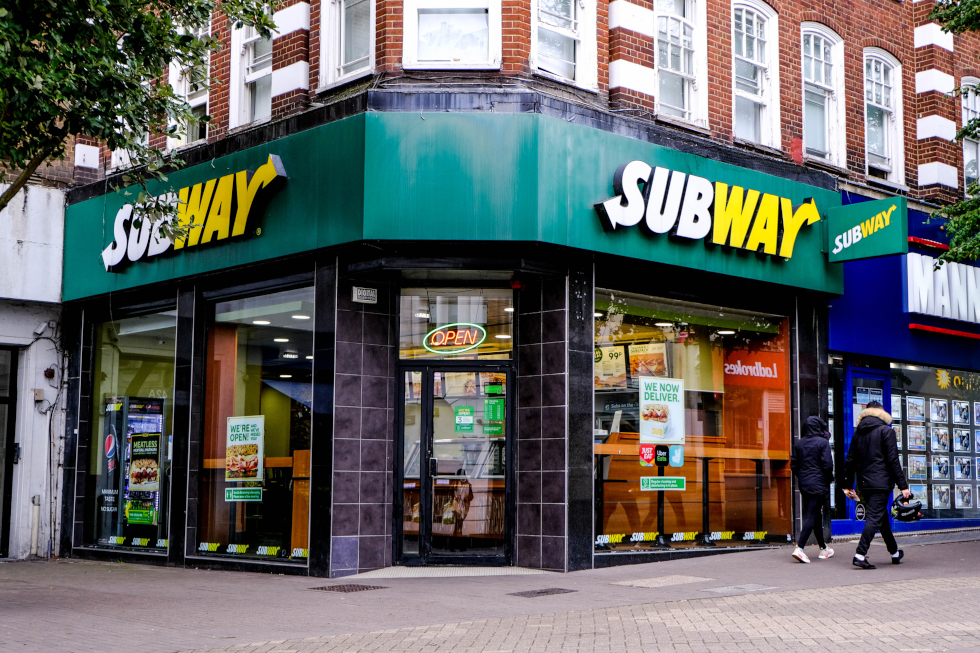
Subway
Brand strength: Subway is a globally recognisable, quick-service sandwich brand with a huge UK presence on high streets and in shopping centres and transport locations. Flexible store formats (like kiosks, in-line units and petrol stations) can make it possible to fit a store into smaller sites than it is for the likes of larger operation burger brands.
Investment and cost: Typical total investment in the UK is often quoted around £100,000 to £250,000, depending on site size, condition and location costs. The franchise fee is also known to be on the lower end compared with other big food brands, at about £13,000, but more of the spend goes on fit-out, equipment and opening inventory. This could make it a more affordable investment opportunity in the food and drink field. Subway can sometimes be an entry point for investors who want a recognised name but don’t have the capital to stretch to McDonald’s’ level of investment costs.
Earning potential: As with other food franchises, profitability depends on rent, local demand and cost control – the brand provides training, systems and marketing support.
Low-cost franchises
While a lot of people mistakenly associate franchising with the big-name brands, it’s actually the smaller and lower-cost franchises and SMEs that are the lifeblood of the sector. These companies offer opportunities for entrepreneurs who have smaller investment capital or wish to run a flexible or part-time business.
Here, we outline businesses that require around £10,000-£20,000 total investment, with some cheap franchises in the UK offering options under £5,000 and even £2,000. These often involve service-based, home-based or mobile franchise models, with no need for a fixed retail premises, which keeps overheads down.
The trade-off can sometimes mean that the investment potential is lower than big brands unless the franchisee builds a sizeable client base or multiple territories; however, the option to have a better work-life balance and to run a business around your own personal life can be very appealing.
Travel Franchise
Business model: The Travel Franchise allows you to run a home-based travel agency, selling package holidays, cruises and tailor-made trips from your laptop rather than having a high-street shop. It is designed for people with no prior travel industry experience.
Investment: The Travel Franchise itself promotes a tiered investment structure, with its “Lite” package available for around £2,995 (+ VAT). Its tiered options make it a low- to mid-cost franchise opportunity for those looking for cheaper, home-based franchises.
Suitability: Many franchisees start the business part-time alongside existing jobs, using the flexibility of the home-based model to build a client list before going full-time. There are some examples of franchisees who have scaled to multi-million-pound sales volumes and won awards, which can illustrate the upper end of the earnings and growth potential.
It’s worth noting, though, that income is commission-based and can be seasonal, so franchisees need a pipeline of repeat clients and referrals, plus a tolerance for variable monthly earnings and be able to commit to personal sales activity, networking and marketing.
Molly Maid
Business model: Molly Maid is a domestic cleaning franchise operating with teams visiting clients’ homes on a regular schedule. Franchisees typically manage staff, vehicles and customer relationships, rather than doing all the cleaning themselves once established.
Investment: Domestic cleaning franchises are often marketed as mid- to -low-cost options compared with food or retail, with many below £20,000 and sometimes below £10,000, depending on territory size and what’s included. They’re usually home-based franchises in the UK at first, with the franchisee working from a home office and visiting customers in local areas.
Suitability: Recurring revenue can be generated from regular cleans and it’s a relatively recession-resilient model with he ability to start small and then hire staff. However, people management can be demanding – if you grow your team – and the growth is often linked to recruiting and retaining reliable cleaners.
Barking Mad
Business model: Barking Mad is a pet-care franchise focused on dog home-boarding rather than kennels, operating with local territories. The business is largely mobile and home-based, with franchisees coordinating hosts, home checks and customer relationships.
Investment: Pet-care franchises commonly sit in the low to mid-range bracket, often under about £15,000-£20,000 for a single territory, though exact figures vary by brand and package. Overheads are relatively low because there is no permanent retail site, but a vehicle, insurance and marketing will be required.
Suitability: Appeals to animal lovers who want a lifestyle-friendly business and are comfortable working irregular hours around client travel patterns. Income may be seasonal – it can peak around school holidays or summer – so cash-flow planning is very important.
Multi-unit franchises
One of the most appealing things about franchising is the fact that if you’re experiencing success running one business, you can often expand your portfolio. One of the ways to do this is through multi-unit franchising, where a single franchisee owns and operates more than one outlet or territory with the same brand within an agreed area or development schedule.
This format offers numerous advantages, like the potential for economies of scale. This is accomplished by sharing staff between locations, centralised admin and marketing and better buying power on supplies. It does mean, though, that prospective franchisees will need a higher upfront and ongoing investment.
The agreement is usually set out by the brand itself, and the investor can commit to open a set number of units over a defined period in a region. Other brands offer sequential agreements, where the investor earns the right to open extra units once performance targets are met.
Multi-unit franchising typically suits more experienced operators or investors with strong management skills and access to higher levels of capital. Some brands – most often bigger-name franchises – expect or strongly encourage multi-unit development from the outset, particularly with corporate partners.
Want to learn more about multi-unit franchising or other aspects of the franchise business model? Then head to our resource guide page for everything you need to know.